
Measure the water loss
If it is safe for the pool and equipment, run a 24-hour bucket test and write down the pool drop and bucket drop separately.
Pressure testing isolates plumbing sections and evaluates whether they hold pressure. It is one of the most useful ways to distinguish an underground plumbing issue from shell, fitting, evaporation, or equipment-side water loss.
Licensed, bonded, and insured · ROC 324829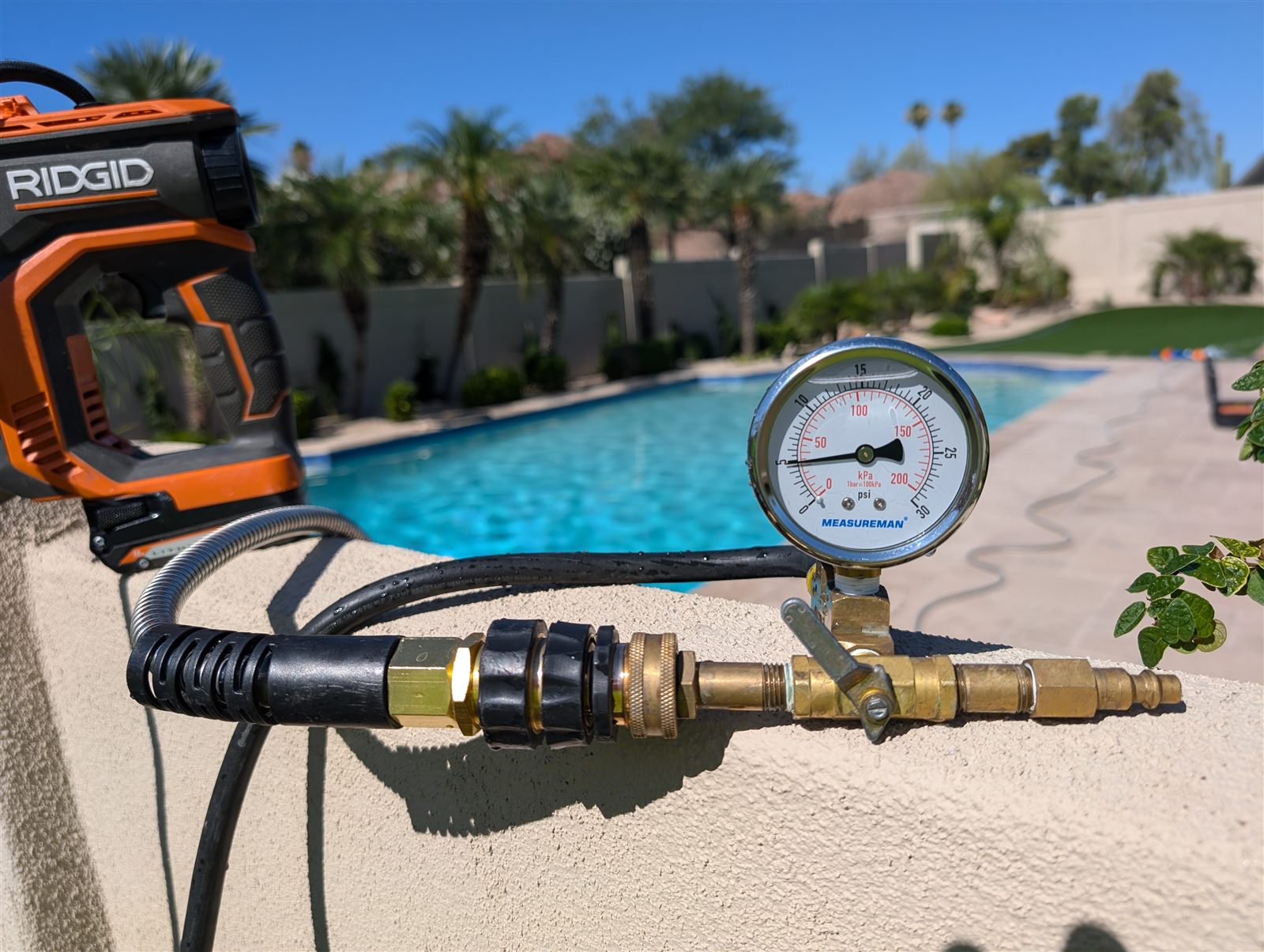
Symptoms
Before the visit
Good notes help Echo choose the right tests sooner. They do not need to be perfect, and they should never put the pool finish, pump, or anyone's safety at risk.
Use the evaporation checkerIf it is safe for the pool and equipment, run a 24-hour bucket test and write down the pool drop and bucket drop separately.
Record whether the pump, spa, spillway, water features, heater, or autofill were on during the measurement period.
Take pictures of wet soil, deck cracks, loose fittings, air in the pump basket, equipment moisture, and the water level where loss slows.
List recent repairs, resurfacing, storms, backwashing, draining, refilling, or plumbing work so the appointment starts with useful context.
The test itself is non-invasive. Excavation is only considered after testing supports that a buried line has failed and locating narrows the likely area.